简介
苹果在2021 MacBook Pros引入了M1 Pro/Max处理器. 这些新的 SoC 如何改变主板的其余部分? 来看看这篇指南吧!
-
-
-
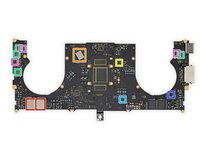
芯片信息,第2部分:
-
英特尔 JHL8040R 雷电4重计时器
-
旺宏电子 MX25U6472F 64 Mb 序列 NOR 闪存
-
华邦电子 W25Q80DVUXIE 8 Mb Serial NOR 闪存
-
瑞萨电子 RAA225701C ? 同步降压变换器
-
亚德诺半导体 LT86422 同步降压变换器
-
德州仪器 TPS62130B 降压变换器
-
德州仪器 TPS62180 6 A 同步降压转换器
-
-
-
芯片信息,第3部分:
-
德州仪器 TVS2200 电涌保护
-
安森美 FPF2495CUCX 负载开关
-
德州仪器负载开关 (疑似)
-
安森美 NCV8160AMX500TBG 250 mA / 5.0 V 低压差稳压器
-
安世半导体 74AVC2T45 双位电压电平转换器/收发器
-
德州仪器 SN74AXC1T45 单比特总线收发器
-
安世半导体 74AUP1G07 单缓冲器
-
-
-
芯片信息,第4部分:
-
德州仪器 LSF0102 双通道多电压电平转换器
-
安世半导体 LSF0101 1 位多电压电平转换器
-
德州仪器 SN74AUP2G07 双缓冲器
-
德州仪器 SN74LVC1G07 单缓冲器
-
安世半导体 74AUP1G17 施密特触发器
-
安世半导体 74AUP1G08 单与门
-
-
-
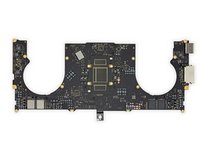
芯片信息,第1部分:
-
铠侠 KICM225VF9081 128 GB NAND 闪存
-
USI 339S00912 蓝牙/WiFi模组
-
恩智浦半导体 SN210V NFC 控制器集成安全模块
-
德州仪器 CD3217B12 USB Type-C Port/PD 控制器
-
瑞萨电子 ISL9240 Li-Ion 电池充电
-
华邦电子 W25Q80EWUXIE 8 Mb Serial NOR 闪存
-
华邦电子 W25Q80DVUXIE 8 Mb Serial NOR 闪存
-
-
-
-
芯片信息,第3部分:
-
德州仪器 INA190A3 电流检测放大器
-
德州仪器 INA190A4 电流检测放大器
-
美信集成 MAX9620 1.5 MHz 轨到轨输入/输出运算放大器
-
安森美 NCS333ASQ3T2G 单运算放大器
-
Dialog Semiconductor 混合信号阵列 (疑似)
-
恩智浦半导体 PCAL6416A 16-Bit I/O 扩展器
-
亚德诺半导体 ADG1422BCPZ Dual SPST 模拟开关
-
-
-
芯片信息,第4部分:
-
德州仪器 REF3325 2.5 V 参考电压
-
德州仪器 TLV75801P 500 mA / Adj. LDO 稳压器
-
德州仪器 TLV75533P 500 mA / 3.3 V LDO 稳压器
-
德州仪器 LP5907SNX-3.0 250 mA / 3.0 V LDO 稳压器
-
安森美 NCP163BMX180TBG 250 mA / 1.8 V LDO 稳压器 (疑似)
-
德州仪器 TLV70733P 200 mA / 3.3 V LDO 稳压器
-
德州仪器 TPS7A201825 200 mA / 1.825 V LDO 稳压器
-
-
-
芯片信息,第5部分:
-
安世半导体 74AVC4T774 4 位转换收发器
-
安世半导体 74AUP1T45 翻译收发器
-
德州仪器 LSF0102 两通道多电压电平转换器
-
安世半导体 LSF0101 单比特多电压电平转换器
-
安世半导体 74AVC2T45 双位电压电平转换器/收发器
-
德州仪器 SN74AUP1T34 一位电压电平转换器
-
德州仪器 SN74AXC1T45 单比特总线收发器
-
-
-
芯片信息,第6部分:
-
安世半导体 74AXP1T34 缓冲器
-
安世半导体 74AUP2G07 双缓冲器
-
德州仪器 SN74LVC1G07 单缓冲器
-
安世半导体 74AUP1G17 施密特触发器
-
安世半导体 74LVC2G32 双或门
-
德州仪器 SN74AUP1G32 单或门
-
德州仪器 TPD4S311A USB Type-C 接口保护器
-
-
-
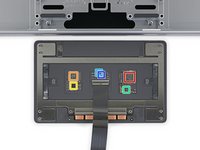
芯片信息:
-
意法半导体 STM32L4P5QG 32-Bit ARM Cortex-M4 微控制器集成1MB闪存
-
博通 BCM5976C1 触控板控制器
-
美信集成 MAX11390A A/D 转换器 (可能)
-
芯源系统MP6519 5A H桥稳流器
-
德州仪器 TPS3831G18 1.67V 电压监控器
-
德州仪器 TPS22915 负载开关
-


 询问修复机器人






10指南评论
In practise, the efficiency of an LDO regulator is dependent on how much voltage it is dropping. While operating, an LDO is effectively a resistor that varies in real-time to ensure its output voltage stays stable despite changes in load current.
Power = I (current) x V (voltage)
Since an LDO is a resistive element, yes, it burns off energy as heat in this process. So an LDO dropping 18V to 5V could be very inefficient, more so when driving a higher current load as shown by the formula above. However, if an LDO is used to generate a 3.3V rail from a 5V rail, it is dropping just 1.7V, resulting in less power dissipation for the same load current.
You’re right, using an LDO for a large voltage drop is not good electrical design. But LDOs have excellent noise rejection performance, meaning they can take a noisy rail from a switching buck/boost converter with lots of transient or high-draw components on it, and create a much cleaner rail for lower-current, more sensitive devices. This is what I expect Apple’s doing.
LDOs drop the difference in voltage as heat, yes - hence the voltage difference between input and output determines the efficiency (eg a 3.0v LDO fed by 6.0v is 50% efficient).
In many cases where LDOs are used in designs the amount of lost power is negligible as the current being drawn is so small - simply not worth using a switcher for that rail. Also, LDOs typically have cleaner output so often an LDO is used to isolate an analog subsystem from noise on the main (digital) system rails.
